Christendom Nostalgia

Either I’m hearing it more or I’m just becoming more sensitive to it. Probably a bit of both. In this volatile, polarizing age I am increasingly noticing among Jesus-followers what I call a ‘Christendom nostalgia.’

A quick definition of terms – ‘Christendom’ refers to the historical period where Christianity enjoyed dominant political and social power.  It usually refers to the period in western Europe following Constantine’s adoption of Christianity as the official religion of the Roman Empire in the fourth century. The political dominance looked different in varying times and location, but one trend is clear: across the western world over the second half of the twentieth century, this historic political and social power eroded. Most western countries can now be accurately described as Post-Christendom.[1] While the established church continues to wield a degree of power and while the influence of centuries of Christian thought can be seen everywhere in our ‘secular’ culture, identifying as Christian is no longer particularly socially advantageous, nor are Christian values (of some variety) the assumption in public life.

When I refer to Christendom nostalgia, I mean the sense of grief for a lost past, and the desire to return to some form of Christendom – for Christians to take back power. We’re seeing a particularly ugly form of this with Trumpian Christian Nationalism in the US but I want to focus particularly on my own context here in the UK.

People bemoan the fact that ‘we used to be a Christian country.’ They celebrate and vote for Christian politicians, with the assumption that if we can just get Christians into positions of power, that will be good news. And before we write this off as the preserve of the elderly who fondly remember the good old days of Billy Graham crusades, full churches and ‘traditional’ values, think of how many contemporary movements and worship songs use the quasi-militaristic language like ‘winning the nation back.’

I want to be careful here. I think the vast majority of people who express opinions like this are well-intentioned and fearful about what they (with plenty of justification) see as an increasingly chaotic, contested and dangerous world. The attraction of wanting to return to the stability and safety of an old order is certainly understanding.

So, what’s wrong with this sort of nostalgia?

  1. It is fiction

    Is there a single point in British history where this country has vaguely resembled the Kingdom of God? The Christianity of the Middle Ages condoned the crusades. The Christianity of the Reformation was perfectly happy to torture and burn heretics. The Christianity of the early modern period accepted and often provided the moral justification for the transatlantic slave trade. The Christianity of the industrial revolution had little critique for the mass exploitation of labour and creation, and the avarice of global imperialism. The Christianity of the twentieth century held onto a colonial legacy and remained broadly silent on the dehumanising persecution of minorities.

    Of course, there were countless voices of dissent along the way – faithfully living the way of Jesus in the midst of a Christendom that looked nothing like its Christ. But those faithful disciples have tended to be the exception.

    It is just too simple to wish for the good old days where everyone went to church. Maybe in the 1950s most people did go to church. But we must not mistake church attendance for devoted discipleship and transformed lives. Breadth is not depth. Christendom bred a form of cultural Christianity that brought social reward to nominal belief but which generally frowned upon belief too zealous or committed. In other words, Christianity was accommodated to the dominant culture – where faith could be diluted and twisted to bolster the status quo all was well, but where faith might subvert or challenge the status quo it was supressed or mocked.

    Of course, Christendom was not all bad. But we should be very careful not to assume that social and political power was a good thing for the church. When we wish for the good old days of Christendom, we too easily imagine a fictional past and whitewash the reality that power and comfort may have helped get bums in pews and it may have made us feel like we were more in control of moral norms, but it was a poor environment for growing deep faithful disciples.  

    2. It misunderstands discipleship

      Most Christendom nostalgia comes across as being self-interested. Why do we desire a past where it was easier to identify as Christian, where it brough social and cultural benefit, and where Christians had more political clout? Maybe there are some more altruistic motives there but it certainly sounds like we just want our lives to be more comfortable.

      Discipleship is always the tension of the yoke and the cross – there is comfort, for sure, but the comfort found is in a messiah who is with us in the daily dying to self, the daily bearing of our cross.

      I wouldn’t mind the blatant self-interest of much of the Christendom nostalgia if it was in the context of a consistent care for others. For example, if the logic was that we fight for religious liberty for those of all faiths, because we’re concerned about the common good. But too often, we are far more concerned about my rights and my liberty, and I can’t help but think that Jesus generally seemed to be far more concerned about the wellbeing and flourishing of others. Are we aligning more closely with the hyper-individualism of American libertarianism than we are with the way of Jesus? Or worse, are we aligning with the uglier forms of Christian nationalism than, implicitly or explicitly, feel threatened by migration and think that the country would be better without those who think (or look) different from ‘us?’

      3. It misunderstands the politics of Jesus

      Christendom nostalgia wants Christians to be in power. Rather than the revolutionary subordination of Jesus, it fully co-opts the fallen power-games of the world.

      We may not have quite the same degree of cultural-captivity as in the US, where the majority of white evangelicals have become so fixated on the quest for power that they are prepared to support candidates like Trump. But I still often hear among fellow believers the assumption that it is a good thing to have Christians in power (provided, of course, they are the right kind of Christian). I am certainly not opposed to Christians running for political office, but I seriously worry that when we assume putting Christians in charge is unambiguously a good thing we have assimilated the politics of power, not the politics of the kingdom. We are playing by the rules of the enemy, not by the rules of Jesus.  

      4. It misunderstands the mission of the church

      And let’s be clear, when the politics of Christians looks like a self-interested quest to cling onto power, to guard privilege, to put people ‘like us’ in charge, and to reminisce about an old order without acknowledging or repenting of the vast sins in which the Church of the past colluded, it is hugely damaging to the witness of the church.

      Christendom nostalgia assumes that the mission of the church relies on the exertion of political and social power. The way that we join in with God’s redemptive mission to put right all that is broken in creation, according to Christendom, is to legislate it into being.

      While I think there absolutely is a place for Christian vocation in politics, this assumption that the kingdom of God requires top-down political enforcement seems wildly at odds with the bible. The kingdom is like yeast and mustard seeds – it begins small and insignificant. And God’s method of establishing his kingdom is the cross – God-forsaken, humiliation, defeat, shame, suffering, weakness – the antithesis of any political power play, or strong man, or PR campaign.

      We are in a cultural moment of compounding crisis and breakdown of trust in institutions. It is an incredible missional opportunity for the church to offer a better story – a politics of justice, peace, reconciliation, flourishing and self-giving love in an age of violence, polarization, self-interest, greed and isolation. But we’re too often opting for assimilation rather than distinctiveness. Is it any surprise that people are not particularly interested in Jesus if all they see from the church is more of the same?

      5. It is inconsistent in its political critique

      This one is very much influenced by the religious right in the US, but I am increasingly encountering it here in the UK.

      Christendom nostalgia does seem, more often than not, to be accompanied by an uncritical allegiance to those elements of the political right that seem determined to wage culture wars. That means that what might start as a more innocent fear at the pace of social change can often become morphed into a wider, and more insidious, agenda of conspiracy theories, political populism, anti-immigration xenophobia, misogyny, homophobia and racism.

      I am all for a healthy critique of leftist ideology. But the politics of Jesus compels us distrust political ideologies from across the spectrum. What frustrates me is the inconsistency with which my brothers and sisters point out the dangers of critical theory or cultural Marxism or post-modernism, while uncritically upholding (and often benefiting from) the status quo of industrial capitalism, militarism, consumerism and cultural imperialism.

      If our political witness is to be faithful and consistent, we need to be prepared to critique all ideology that is dehumanising and destructive. We need to model an alternative politics in our church communities. And from there we seek the welfare, the common good, of society.

      So what should we do instead?

      Perhaps I can write more about these another time, but some very quick ideas to get us started…

      1. Cultivate hope, not fear

      Fear brings out the worst in us. When our posture towards the world is one of fear, we do two things: we look for strong men (and it is almost always men) who will fight our cause. And we look for others who seem to share our fears, forming homogenous echo chambers. These are both dangerous on so many levels.

      We need to be a people of resurrection hope – hope that Jesus is risen, that he is Lord, and that he is at work, in the midst of all that is wrong and broken in our world to put things right. That hope is the antidote to the politics of fear.

      2. Embrace marginality

      The western church has lost most of its social and political power. What if we embraced that? What if we dared to believe that God’s mission has never been dependent on our power? What if we saw it as an opportunity for greater solidarity with those on the margins and greater intimacy with the messiah who moves towards the margins? What if we saw the marginality of the western church as a missional opportunity, rather than a threat to our comfort?

      3. Find hills worth dying on 

      Christendom nostalgia picks the wrong fights. When we make a fuss about not being allowed to wear crosses in certain jobs, or being punished for offering prayer, or about other religions apparently getting preferential treatment (as in ‘they wouldn’t be allowed to say that about Muslims’) all the while staying silent on racial justice, or climate justice, or economic justice it communicates pure hypocrisy and self-interest. We have to decide what we focus our limited time and energy and resources on. Surely we need to focus it on where our fellow image-bearers across the globe are in greatest need.  

      4. Take political discipleship seriously in our churches

      Most churches that I’ve been part of are very cautious of being ‘political.’ This often comes from a good place – a desire to stay out of the mess and tribalism of party politics. It tends to draw on Romans 13, which is an important passage for political theology, but certainly not all the bible has to say about politics. The problem is that if we are not forming disciples in our churches who are able to navigate the nuance and complexities of what faithful engagement with politics looks like, other forces will fill that discipleship void. The best antidote of the bad is the practice of the good. It’s complex, but I wonder if these contested and volatile times require us to re-imagine what it looks like to disciple our congregations in the politics of Jesus.


      [1] It’s important to say that this is only true of the West (Europe and the US). Post-Christendom is not necessarily the same as Post-Christian – Tom Holland, in his book Dominion, makes a compelling case for the enduring legacy of Judeo-Christian heritage in western society, in spite of the decline in church attendance, religious affiliation and power.


      Gardening as Liturgy: Part 2

      Tending a garden is slow work. Little can be achieved in a hurry. Germinating, training, ripening, improving the soil – even with the best conditions – requires a lot of waiting. There are few short cuts which do not compromise the long-term health of the garden.  

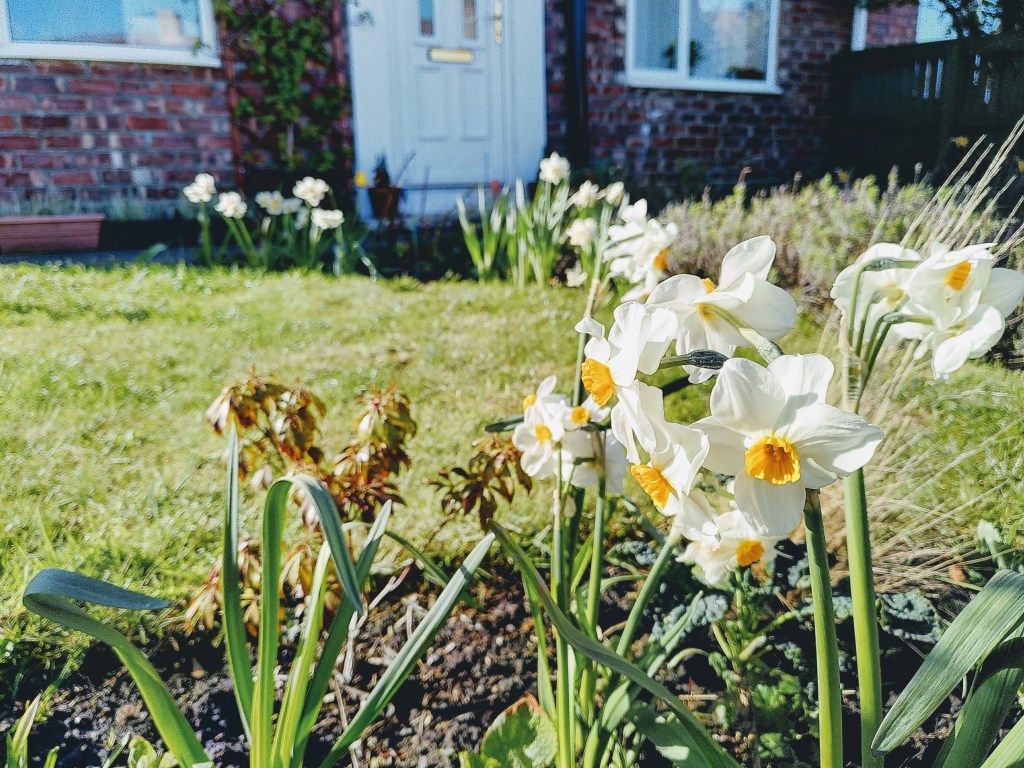
      I am struck by how loose my control over my garden really is. At the mercy of weather, pests and disease, there are significant limits to the influence I am able to wield over the process. My intervention might be able to keep a plant healthy, or even hasten its growth, but always with the risk of damage. In this last year I have had very little time for my garden. But the snowdrops still came in February, daffodils in March, tulips in April. The soft fruits are plentiful, foxgloves and nigella have seeded themselves bountifully and the echinops are putting out great thistles. All this has happened in spite of me – I can claim very little credit.

      For the most part, gardening is dull and repetitive. What little work I have done over the last year has mostly been weeding – the ultimate war of attrition. Weeding is never done; there will always be some that escape and, without fail, more will have grown back in a week’s time. It would be easy to despair at the futility of it, but you cling on to the hope of summer – you imagine your flourishing borders unencumbered by competing weeds – and somehow that makes the drudgery worth it.

      The sentimentalist in me gets pretty disheartened by all of this. I find it easier to like the idea of gardening far more than the actual practice of gardening. It’s easy to idealise the beauty of a well-tended garden and to persuade yourself that it can be achieved with minimal effort or cost. But, like all sentimentalism, this is a recipe for disappointment and disillusionment.

      Here it might be helpful to recap James K.A. Smith’s idea of a liturgy. We are what we love: where we focus our desire and how we imagine the good life forms our identity. And our desires, in turn, are shaped by repetitive practices and rituals. Think of how the practice of shopping may train us to desire certain products and to imagine a good life that involves an abundance of possessions, or how the practice of weightlifting may train us to desire a certain body shape and to imagine a good life that involves physical prowess. These identity-forming practices are what Smith calls liturgies.

      I think gardening is a liturgy. Or, to take it a step further, I wonder if gardening is best thought of as a counter-liturgy. The idea here is that we are, all of the time, being formed by liturgies. Most of those liturgies are secular liturgies – liturgies which mis-direct our desires towards things other than (and often opposed to) the kingdom of God. Discipleship, says Smith, often attempts to counter these secular liturgies with ideas and beliefs – thinking the right things – which is always doomed to failure because we are not purely rational beings. Instead, we need to counter those secular liturgies with counter-liturgies – practices which re-order our desires towards the Kingdom.

      Gardening re-orients my desires in many ways.

      The slowness of gardening counters those secular liturgies which train me to hurry, to rush, to compete. It calls into question the story of joyless, restless efficiency and production, and situates me in a better story – of seasons and patience and margin.

      The limits of my control over my garden counter those secular liturgies which teach me to be a rugged, sovereign individual – the lonely captain of my fate. It calls into question the story of ever advancing technological innovation ushering in a utopia where all risk (including the perpetual risk of love) is eliminated, and it situates me in a better story – where there is beauty in knowing the limits of my wisdom and foresight. Where community, humility and integrity matter more than conquest, safety and comfort.

      The dullness and mundanity of gardening counter those secular liturgies which insist that the only life living is one of spontaneity, self-centred hype, exaggerated achievements and rampant hedonism. It calls into question the story of empty celebrity and the unrealistic expectations of an Instagram-able life, and it situates me in a better story of rhythm and discipline, of humble aspirations, of good honest hard work, and hope of redemption. A story that values the glamourless work of character formation and showing up to reality higher than the synthetic sheen of marketing, relentless maintenance of my personal ‘brand’ and the untethered morality of being ‘true to myself.’

      In so many ways, gardening is a counter-liturgy which is transplanting me and my desires from the lifeless, claggy soil of late modern secular culture into the deep, rich loam on the Kingdom. That uprooting is not a given. It’s contested. In the garden, there is always the temptation towards hacks and shortcuts. It is always tempting to squash the redemptive potential by doubling down on those secular liturgies I have been schooled in. But slowly, imperfectly, by the grace of God, I trust that my garden is an arena for counter-liturgy – for transformation.

      Comfortably Numb

      I haven’t cried for at least five years. In the last decade, I can only think of two occasions when I have properly wept. And I’m increasingly thinking that this is a problem.

      Many writers I really respect have a lot to say about the importance of grief and lament. To give a few quick examples…

      ‘Lament is a public protest against the way things are. It enables victims of evil to express anger and disappointment with God and the ways things are… lamentation is a process of spiritual catharsis, affirmation, and empowerment. As such it is a gesture of resistance in the face of evil’

      John Swinton, Raging With Compassion

      ‘Mourning is intuition that things are not right – that more is possible. To think that more is possible is an act of political resistance in a world that wants us to believe that consumption is all there is… Hungering and thirsting for justice is nothing less than the continued longing for God to come and set things right… it is to hope that the things that cause us to mourn will not get the last word’

      Esau McCaulley, Reading While Black

      ‘We do know from our own pain and hurt and loneliness that tears break barriers like no harshness or anger. Tears are a way of solidarity in pain when no other form of solidarity remains’

      Walter Brueggemann, The Prophetic Imagination

      I’ve always found this sort of thing inspiring, but it also disturbs me. It confronts me with the possibility that my spiritual formation and my pursuit of justice are, in some important ways, being stunted by my inability to grieve healthily. If Brueggemann is right that ‘hope expressed without knowledge of and participation in grief is likely to be false hope,’ then I have an issue.

      It hit home recently when I found out that a young man on my estate had died from substance abuse. I’ve lost count of how many times this has happened now in the seven years that I’ve been here. I greeted the news with sadness and anger, but not with tears. A life bearing all the beauty, potential and worth of the divine image has been cut abruptly, appallingly, meaninglessly short by an addiction that was itself a symptom of so many other layers of injustice. And my response to such evil was barely enough sadness to break the stride of my well-scheduled day.

       I can’t pinpoint exactly why I struggle to weep. I have wondered if it might just be a personality thing – perhaps I am wired in a way that predisposes me to a more stoic, internalised approach to grief and I just need to accept who I am and cut myself some slack. But I’m not convinced. First, because I’m cautious of misusing personality typologies to reduce people into neat, fixed and predictable ways of being in the world. Even if I had a learned preference that made externalising grief difficult, that doesn’t mean a) that it is healthy, b) that God made me to be that way, or c) that I can’t change or develop that.

      Second, on all the personality tests I’ve done, I generally align more closely to a feeling rather than a thinking preference. I am relatively emotionally intelligent and empathetic. I just don’t cry much. In other words, the struggle with grief is an anomaly rather than part of a wider trend of emotional repression.

      I’ve also wondered if toxic masculinity is to blame. I don’t want to dismiss the possibility out of hand. The culture I have been formed in has undoubtedly conditioned me to see weakness as a bad thing and crying as un-manly. By and large, though, I don’t like that sort of masculinity and I’ve never felt comfortable in ‘laddish’ spaces where that sort of group identity proliferates. So, while I am sure that I am not immune to the influence of toxic masculinity, I don’t think that it is primarily to blame for my struggle. When I’m sad, I don’t (consciously, at least) tell myself to man-up or to keep a stiff upper lip.     

      I wonder if the real issue is to do with comfort. I have made various choices which could probably convince most people that I haven’t sold out to the materialist fantasy of comfort that comes through consumption and the avoidance of suffering. But I am discovering that it is very possible to be physically engaged in working for justice, and yet mentally insulated from the inevitable exposure to suffering. I have learned that numbness is an effective coping mechanism when I’m confronted with pain. It allows me to stay steady and it protects me from the scary possibility of being out of control and wrecked by sorrow. As a defence mechanism, it has served me very well. But the cost, I’m learning, is high.

      Numbness may be a convenient way to avoid or minimise my own experience of pain. But it also restricts my own humanity. If Jesus is our model of human flourishing, then flourishing requires the ability to grieve and mourn healthily. And linked, my numbness reduces my capacity to love others. If I really want to give my life in service of others, then I think that requires the willingness to meet others in their grief – not to maintain the aloof safety of emotional distance.

      So, what should I do? I am very much open to suggestions. I’m reading Aundi Kolber’s Try Softer at the moment, so I’m alert to the temptation I have to ‘white knuckle’ my way to a solution and try to fix this with strategy and will-power. I’m confident that there is some deep work needed here, and that trying softer is therefore going to be far better than trying harder, and progress is likely to be slow. Once again, I am staring my idol of control in the face, and as I have written about previously, I am not quite sure what it looks like to actively surrender control – in this case to actively surrender my emotions. I have tried to manufacture sadness – sitting still and willing myself to cry – with little success. It feels a fine line to tread between deliberately paying attention to the sorrow and suffering around me and going out looking for tragedy in a masochistic way.

      I suppose prayer is the best place to start. I remember years ago reading Richard Foster talking about praying for the gift of tears. That seems the best way to frame what I need – not a project, but a gift. Once again, with my tried and trusted techniques unavailable to me, I have no choice but to return to the unhurried rhythm of grace.

      Adoption and the End of the Idol of Competence

      Our son has been with us for just over a month now and so far adoption has felt a bit like jumping into a plunge pool – I knew intellectually what we were getting ourselves into, but no amount of thinking can prepare you for the gasping shock of going under the water.

      Teething, a virus, and now all three of being down with covid has amplified what was always going to be a rough ride for the three of us. I feel stretched beyond limits I‘ve never really pushed before. To be ill when your child is ill, I have discovered, is brutal – especially when the double-whammy of building attachment and covid remove most possibilities of outside help. We’ve battled, with fevered and aching bodies, to help him sleep, knowing that the only chance of getting the rest we also need is in the fragile bursts where he is able to sleep through the pain he is too small to understand.

      I don’t want to be overdramatic. We are ok. I think we are through the worst now and we have had moments of real joy too. I am sure that what we are experiencing is relatively normal for new parents, and far less complicated than the start of many adoptions.

      I wonder, though, whether this is a bit of a purgation for me. Being ill, sleep deprived, and desperately trying to get this tiny stranger to stop screaming has dredged up the ugliest parts of me. I am confronted with the truth that for all I can present a kind and compassionate image – there remain deep areas within me that I am scared and ashamed of. I teach my students that the real test of character and leadership is who you are under stress and when no one is looking. I am not passing that test with flying colours.

      All of which is bringing me face to face with the idol of competence. As idols go, it’s relatively benign and highly rewarded – it drives me to work hard and serve others. But the truth I can no longer avoid is that I have constructed a large part of my identity around being good at coping, at solving things, at producing good work. Which is all fine until I find myself – as I do now – pushed beyond what can be achieved by effort and planning and technique.

      Which is why I am not desperate to move on from this stage. I’m looking forward to things settling down and to us all getting a bit more sleep, for sure. But I think, ultimately, this is good for me. I trust that God can use this time of pressure and stretching to do some deep, refining work to form me into who he has made me to be.

      Painful as it is to have those ugly parts of my character exposed, I know that ignoring them won’t help or heal anything. Humiliating as it is to confront the idol of competence, like any idol, it is obstructing me from full, flourishing life in Jesus. So, it’s good to name it, and good to break its power.

      But here’s the tricky bit. How do I break an idol of competence without relying on my own competence?

      If my issue is an overreliance on my brain, strength and will-power in achieving my own self-improvement, how do I change that without relying on thinking, or working, or willing my way into change?

      What does growth look like when my tried and tested methods of growth are the problem?

      I sort of know where I want to get to: dependence on God – surrender to his will – a total reliance on Him and not on my own capacity, capability or creativity. But how do I get there without treating it like a problem to fix or a project to complete?

      Surrender could mean something passive – just leaving it up to God to sort me out. But I worry that a passive understanding of surrender can become a sort of spiritual cop out absolving me of any responsibility for my own discipleship. I think God wants to involve me in the process rather than just zapping me into conformity.   

      My guess is that what I’m after is a sort of active surrender. I don’t know yet what exactly that means. Maybe some good first steps will be things like taking the small, daily decisions to yield, and to acknowledge my need, my dependence. To own the humbling failures and the new limits that come with having reduced capacity for work. To be present to God in the joys and anxieties of caring for a baby. To choose over and over to trust in God’s goodness and not my competence as the bedrock of by being and doing.  

      It’s funny, I have prayed for greater dependence on God for many years. I’ve been acutely aware of how easily I can make this whole discipleship thing a self-help project that relies too heavily on my own competence. I’ve made my bed, so I’d better lie in it. Painful and disorienting though this exposure and idol-shaking is, I want to seize this moment – not primarily with grit and will-power – but with gentle, humble embrace.

      Adoption and Ambiguity

      Since spring, we have been working our way through the adoption process. Through most of that period, it has all felt sufficiently distant for me to assume that I’ll probably just be ready for it when the time comes. But now that dates and decisions are getting quite close, I’ve been wondering if I need to be a little more proactive about getting myself as ready, mentally and emotionally, as I can be. So, I’m going to see if writing about it helps. 

      To be honest, as far as I can tell, it’s all just feeling very ambiguous.  

      On quite a practical level, there are all sorts of uncertainties, around matching and timing and most obviously around the particular needs of the child who we end up welcoming to our home. We know that this will dramatically change our lives, but we have no idea quite how. We know that it will be really hard, but we have no idea how hard. 

      Then there are the uncertainties that I imagine all new parents feel around our capacity and preparedness to be the attuned, nurturing carers that this child is going to need. We are bringing all of our idealised hopes of the sorts of parents we want to be, all of the baggage (good and bad) that we carry from our own upbringings, all of reading and learning that we’ve been ploughing through. And we have no idea if it will be enough. We have no idea if we will be up to the task. For two high achievers who struggle with perfectionism, this is all a bit uncomfortable. 

      And combined with all of those uncertainties is the ethical ambiguity of adoption itself – at once so beautiful and so tragic, so redemptive and so deeply wounding. The more we learn about trauma and attachment, the more cautious we are of seeing adoption as anything more positive than the least bad option for children in dreadful situations. I think we need to sit with the uncomfortable reality that by adopting we are participating in the breaking of bonds that ought never to be broken. 

      Of course, we remind ourselves, adoption will be the last resort for the child that is placed with us. There are children who need a safe home and loving family – and we hope we can give that. But we’re feeling the brokenness of it all – the cycles of trauma and abuse, the entrenched generational injustices, the chaos, the bleakness, the poverty of love, the unimaginable grief and shame and powerlessness that must come with having a child removed from your care.  

      Hard as it is, I think it’s right that we sit with all the brokenness and that we look it in the eye. It forces us to interrogate our own motives, it heightens our sensitivity to any hint of a saviour complex and it makes us wary of telling an adoption narrative that is all neat and saccharine and happily ever after. 

      So, as I say, lots of ambiguity. But right now, sitting at my desk on a grey October Saturday, that ambiguity feels alright. I’m feeling it, for sure, but it’s not heavy or debilitating. It feels contained – tethered and held in check – present but not dominant.  

      It brings into sharp focus what is probably true of all life this side of new creation – that clunky juxtapositioning of joy and pain, redemption and brokenness, beauty and tragedy. Life is ambiguous, uncertain and mostly out of my control. This has always been the reality, our adoption journey hasn’t altered that. But what getting ready to adopt has done is remove the option of insulating ourselves from that reality. That’s not easy, but I trust that it is good. 

      Our Home

      I live on a social housing estate in the North East of England. The estate was built in the thirties – all red brick terraces arranged around a central roundabout like spokes in a buckled wheel.

      Houses on the estate come in two designs. Ours is of the simpler design – the economy class, I suppose – two up, two down, except that one of the two upstairs rooms has been divided into what you could probably get away with calling separate bedrooms, provided you don’t require space for any furniture in addition to the bed.

      When I first moved to the estate, I spent a year sleeping in one of the smaller rooms. I decided that I would like to have somewhere to store my clothes and so compromised: opting instead for a futon rather than a single bed, which fitted me perfectly provided I slept at the correct angle, with my body on one side to avoid the wooden joint in the centre and my legs slightly bent. I actually got quite used to it.

      Though marginally bigger, the adjoining half-bedroom has a redundant chimney breast jutting out which means that if you want to fit a bed in the room and still be able to open the door, you have a choice between creating two inaccessible alcoves by placing the bed against the chimney breast, or putting the bed against the radiator and preventing what little heat it is able to produce from warming the room.

      I occasionally image myself designing a little bed that folds up vertically into one of those alcoves, like Professor Calculus in the Tintin books, but I have so far lacked the Professor’s engineering skills or leisure time.    

      Nothing about the house seems to have been designed by someone who had any concern for the future occupants. All of the radiators are directly below windows, so the heating is inefficient and expensive. The south-facing windows are small while the north facing ones are big, meaning that the house gets little natural light and is often colder inside than out. They are double glazed, but grime and condensation sit permanently between the panes. Under the stairs is a tiny room with a toilet but no sink. Upstairs, we had to install our own shower – the house did not come with one. Oh, and neither did it come with carpets, fridge, washing machine or oven. It turns out that the housing association has a policy of totally and inexplicably gutting a house before a new tenant moves in. Quite why they think it is a good idea to present a single mum or an elderly couple with bare floorboards and crumbling plaster and a gas meter jammed off until a safety check in arranged is beyond me. Perhaps the problem is precisely that they don’t think about it. It is an extractive system – designed to squeeze maximum rent out of these rickety old houses with the minimum cost or effort. Why would such a system see any value in personal connection, or local knowledge, or a job well done? None of that makes sense when you can just outsource responsibility to underpaid and overworked operatives in distant call-centres.

      In many ways, this house is a testament to a thousand ‘efficiencies’ and cut corners by distant organisations who cared more about their bottom-line than about good work, or good sense, or compassion.

      Yet, for all of its flaws, we have made this house our home. It has felt like a victory hard won but assisted hugely by the house’s greatest redeeming feature: the garden. Most of it sits in the shade of the windowless northern wall of the house and it has little protection from the cold winds that tear in from across the nearby fields. The clay soil may be layered with generations of plastic waste but it is dark and rich. The plot is a decent size, and it is ours.

      It sits in the shade of the house with little protection from the wind. But the clay soil is rich, the plot is a decent size, and it is ours.

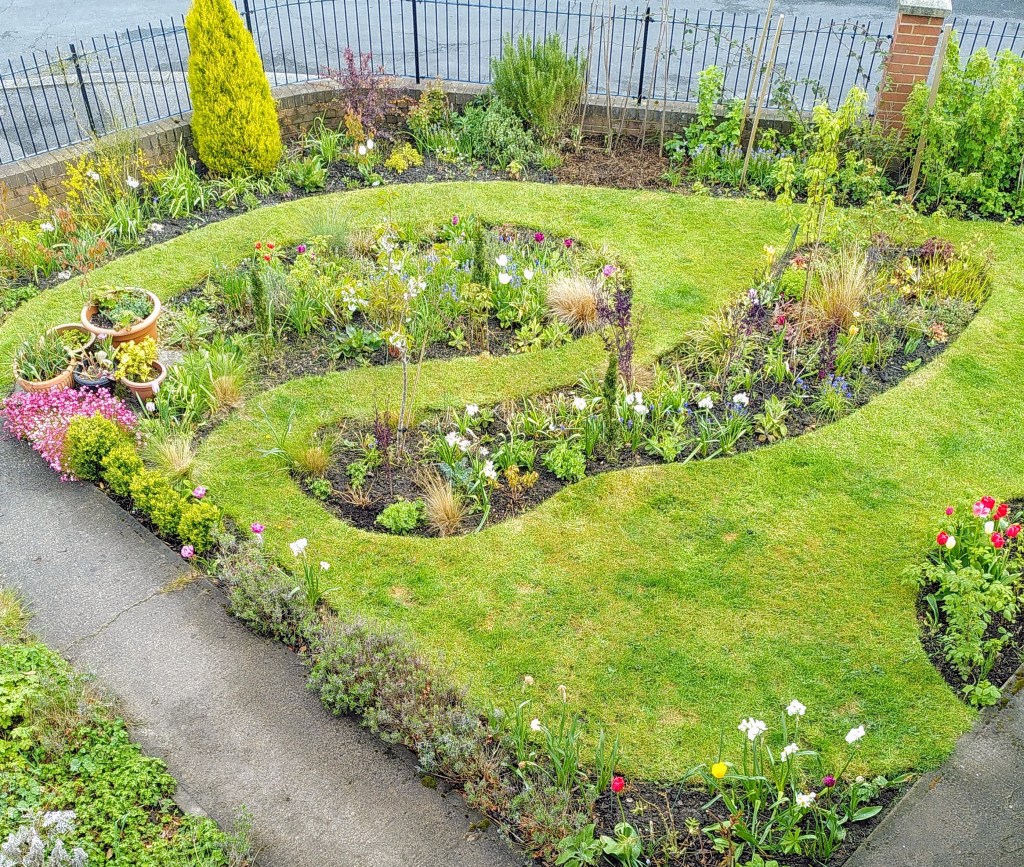
      I have been gardening here, with limited skill and on a tight budget, for the last four and a half years. Each year has seen new projects, new plans made, adapted and sometimes forgotten, new strips of turf lifted to create new beds or enlarge existing ones. Almost everything I have planted is young and small – the process has come to feel like an act of faith in a future maturity that could well be someone else’s to enjoy.

      Tending this small patch of land has been a joy. It has proved addictive but also healing, it has got inside me and changed me. For a long time, I have toyed at the idea of writing about my garden, or perhaps using my garden to write about other things. I have no real horticultural knowledge to impart; I am very much a novice, but my garden has helped me to think, and writing helps me to think. They hold together nicely.

      I’ve been weighing up whether to write a blog for years now. I’m wary because the last thing the world needs is more noise. I’ve been reluctant to write for fear that I may not have anything worth saying. It’s quite possible that I don’t. But on the off chance that I do it seems worth a shot.

      In the end though, this is quite a selfish exercise. I’ve found that writing is good for me and that I enjoy it. I want to do more of it, protect time for it, get better at it, and I hope that this blog might provide some degree of incentive to help me do that.